
No one said tech investing was boring—and the last month proves it. Having briefly touched a new all-time high around 31,500, the tech-heavy Nasdaq-100 index proceeded to fall nearly 15% by mid-November. The Jensen Huang ‘affair,’ if you will, certainly didn’t help matters, but it merely exacerbated an already tough run for the sector. Higher long-term yields—and evidently the results of the midterm election—have weighed heavily on investor sentiment.
So, is this the end of the run for big tech stocks? We think not. In our view, the recent ‘tech wreck’ could be a compelling entry opportunity.
The Cheapest Bubble Ever?
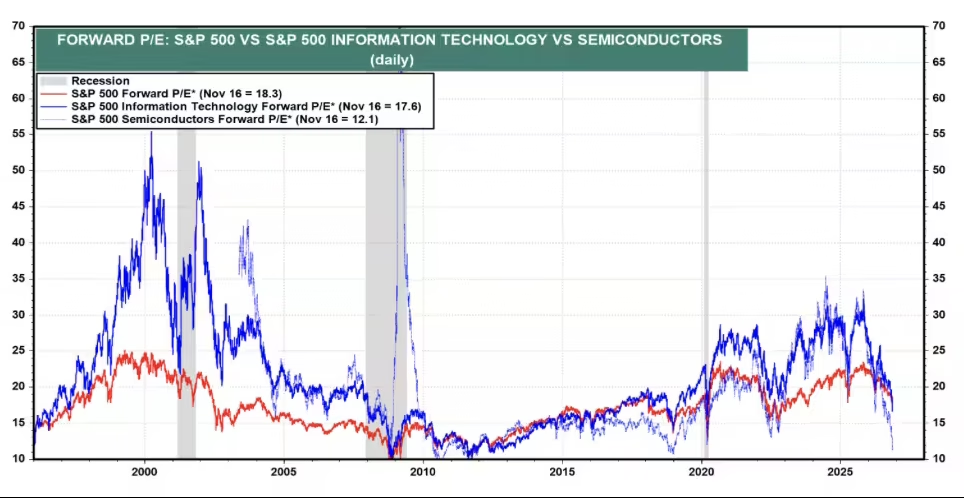
There’s much talk that tech stocks are reminiscent of the late 1990s euphoria, and certainly their runup seems similar. But price/earnings ratios are far lower now than in that episode (and indeed, other bubbles of the past as well).
As the following chart illustrates, the forward P/E for both the S&P 500 Information Technology and S&P 500 Semiconductors sector bear no resemblance to the tech bubble of the 1990s. In fact, over the last year their respective forward P/Es have declined substantially, which is the complete opposite of what happened at the tail end of the run in late 1999/early 2000 where forward valuations spiked amid exuberance for future earnings prospects.
Some of the decline in tech PE ratios is due to stock prices, of course. But the bigger factor is that earnings growth remains robust. SK Hynix is perhaps the most extreme example, but the general trend applies to many tech stocks.
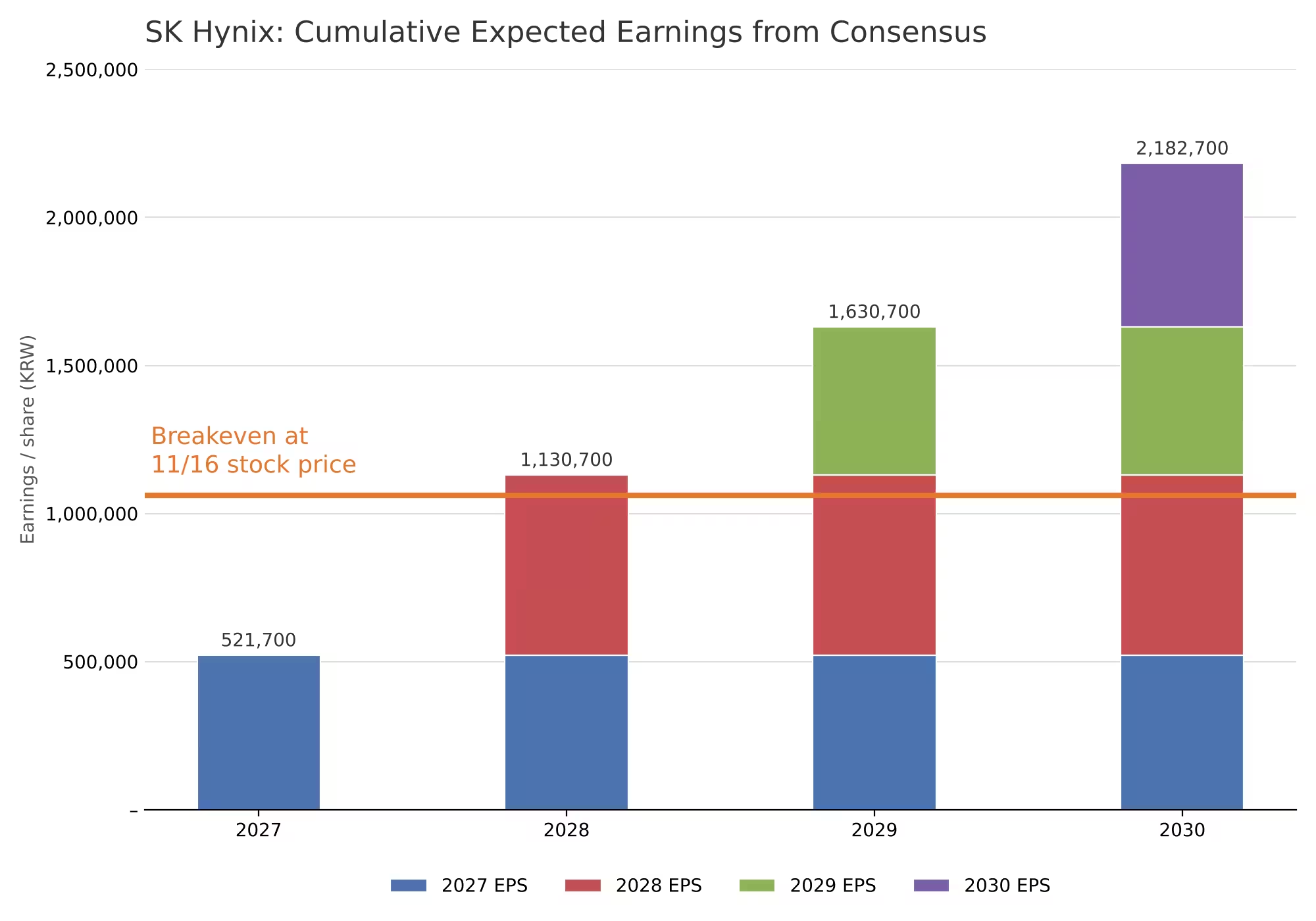
Based on current consensus estimates, the company trades at roughly two times 2027 earnings. And as the following graph shows, if SK Hynix can deliver on consensus expectations for 2027 and 2028, it will earn its stock price in two years and twice as much in four.
Some of the decline in tech PE ratios is due to stock prices, of course. But the bigger factor is that earnings growth remains robust. SK Hynix is perhaps the most extreme example, but the general trend applies to many tech stocks.
Based on current consensus estimates, the company trades at roughly two times 2027 earnings. And as the following graph shows, if SK Hynix can deliver on consensus expectations for 2027 and 2028, it will earn its stock price in two years and twice as much in four.
Despite concerns of the cyclicality of the semiconductor, especially memory industry, investors should be more confident in these near-term earnings projects, as the sector remains supply-constrained until at least 2030 at the earliest. So long as these trends persist, earnings for SK Hynix* and the broader sector are likely to continue increasing—and investors may realize they bailed on stocks that may just be absurdly cheap. *SK Hynix is a core holding of the Kurv Memory ETF.
Why the Midterm Results Might be Good News for Hyperscalers
The consensus coming out of the ‘blue wave’ midterms is that Congressional Democrats will act to slow down new data center building, and that represents a bearish development for hyperscalers. While this is logical on its face, we would suggest that Congress working to lessen the growth of new data centers may actually be a positive development for these companies. Data center buildouts are incredibly capital-intensive, and hyperscalers have been increasingly tapping debt markets to fund them. Think of Congress as potentially playing the role of a bartender who slows down the serving of drinks to customers who’ve overindulged. Moreover, one can argue that this slowing will favor the current incumbents by raising barriers to entry.
Some Tech Stocks are Better Than Others
We’re generally bullish on tech but there are certain sectors, like neoclouds, we think investors should apply additional caution. CoreWeave, for example, strikes us as risky given its high interest expenses, as well as the fact it’s issuing more debt to build data centers. Another name we are cautious on is Nebius, which recently disappointed the market with earnings that came in below expectations. Long story short, tech investors need to be discerning.
Now, for our most controversial view: Despite Anthropic now claiming the largest IPO in U.S. financial history, we are seeing glimpses that a business solely relying on improving frontier models will not be particularly economic.The incremental improvement of successive frontier models continues to flatten. And with the glory days of token-maxxing now past us, tokens increasingly look to be a commodity, leaving Anthropic with little moat.
As with any commodity, marginal repricing and lowering token costs can hurt not just the competing firm but indeed the entire sector. In the case of Anthropic, a shift to inference models by expanding into various verticals, like legal and medical use cases, may diversify revenue. However, this move will increasingly push the company into domains currently occupied by partners (e.g., Microsoft productivity products, legal/medical data partners, etc.), which may turn current allies into competitors.
But while the future appears challenging for Anthropic, there are bright spots for other tech companies. We think firms in the data and compute sectors stand to benefit from continued AI adoption–and investors will gravitate to their stocks as a result.
The Economy Remains Resilient
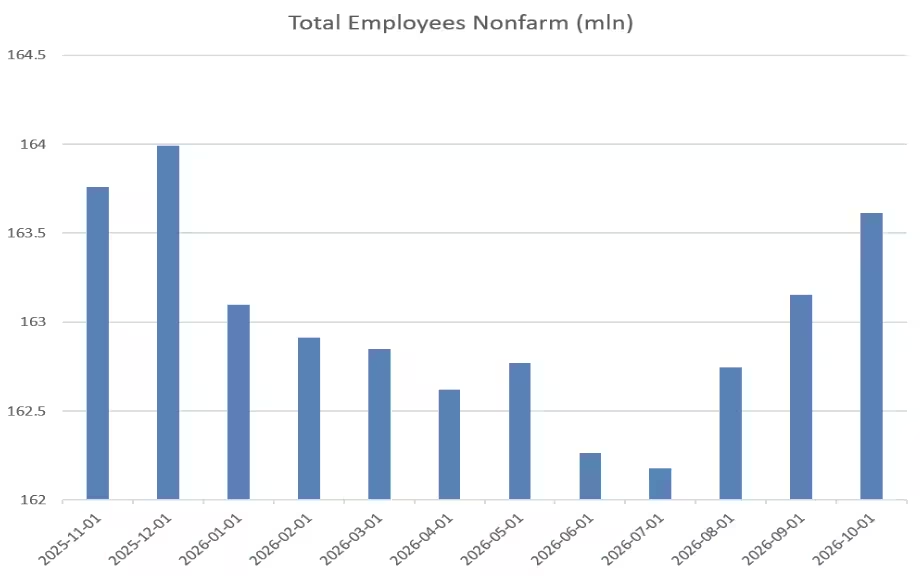
As of mid-November, the S&P 500 is about 6% off all-time highs. As we see it, a few factors explain this resilience. Real GDP growth is around 3.5%, and with inflation hovering near 4%, that gives very strong nominal growth of 7.5%. This is very supportive of earnings. Meanwhile, the labor market is still robust. While we did see non-farm payrolls decelerate sharply in June and July, this soft spot proved temporary. Strong payroll growth bodes well for consumption.
So long as the economy exhibits strength, we think equities–and in particular growth stocks such as tech–will likely bounce back from their latest setback.